I got to a building site in Benin City one morning and the first thing the homeowner told me was:
“OJ, the window is leaking.”
I looked at him.
He looked at the window.
From outside, honestly, there was nothing that immediately looked wrong.
The aluminium frame was still looking fresh. The glass was intact. The window opened and closed properly. No obvious crack.
So I asked him, “When did you first notice the water?”
He said, “The first heavy rain.”
That answer told me something.
Because sometimes, the window is not actually bad until the rain exposes what was done wrongly during installation.
And this is something I have seen more than once on building sites.
A homeowner may spend good money on aluminium windows, see the finished work and feel everything is okay.
Then rain comes.
Water starts appearing around the window.
The wall gets wet.
The paint begins to change colour.
And suddenly the question becomes:
Why is my aluminium window leaking during rain?
Let me explain what I usually look for.
Why aluminium windows leak during rain
There is a simple mistake people make when they see water around an aluminium window.
They immediately blame the aluminium window.
But the window itself may not be the problem.
A leaking aluminium window can be caused by several things — poor installation, bad sealing, incorrect slope, blocked drainage holes, gaps around the frame, poor wall finishing or even the way rainwater is hitting that part of the building.
This is why I don’t like to inspect a leaking window by only looking at the window.
I look at the whole area.
Where is the water coming from?
Where is it entering?
Where is it supposed to go?
That is where the real answer usually starts. Casement vs Sliding Windows in Nigeria: Which One Is Actually Worth Your Money?
I have seen windows that looked perfectly fine

One thing construction work has taught me is that appearance can deceive you.
A window can look beautiful when the sun is shining.
But the real test can come when rain starts beating against the building.
Think about it.
When the weather is dry, water is not testing anything.
The sealant is not being challenged.
The drainage system inside the frame is not carrying rainwater.
The wall is not absorbing water.
So everything may appear perfect.
Then heavy rain comes from a particular direction.
That is when small mistakes become obvious.
This is one reason I always tell homeowners not to judge aluminium window installation only by appearance.
Ask questions.
Look closely.
And if possible, inspect the work when there is rainfall.
1. Poor installation can allow water inside
This is one of the major reasons aluminium windows leak during rain.
An aluminium window needs to be installed properly inside the wall opening.
If there are unnecessary gaps between the window frame and the wall, water can find its way through.
Sometimes the installer tries to cover everything with sealant.
From outside, it may look neat.
But if the underlying installation is poor, sealant alone may not solve the problem permanently.
This is where workmanship matters.
A good installer doesn’t just put the window into the opening and apply sealant.
He considers the position of the frame, the wall opening, water movement, drainage and the finishing around the window.
2. The sealant may be the problem
Have you ever noticed a thin line of sealant around an aluminium window?
That small line may look insignificant.
But it can be doing an important job.
If the sealant is poorly applied, has gaps, doesn’t bond properly or starts failing, rainwater can enter through those spaces.
Sometimes you can even see the problem clearly.
There is a small opening between the aluminium frame and the wall.
Rain hits the area.
Water enters.
Then the homeowner wonders why the wall beside the window is getting wet.
The answer may be as simple as a failed seal.
But don’t just keep adding another layer of sealant every time the window leaks.
First find out why the water is getting there.
Otherwise, you may keep spending money treating the symptom instead of the cause.
3. Blocked drainage holes can cause problems
This one is easy to overlook.
Many aluminium window systems are designed with drainage paths or holes that allow water collected inside the frame to escape.
Rainwater can enter parts of the window system without necessarily meaning the window has failed.
The important thing is that the water should have somewhere to go.
If those drainage openings are blocked with dirt, cement, paint or other materials, water can build up inside the frame.
Eventually, it may find another way out.
And unfortunately, that other way may be into your room.
So if your aluminium window is leaking, don’t only inspect the outside edges.
Look at the frame and its drainage points too.
Which Is Better — Casement or Sliding Windows? The Honest Answer
4. The wall around the window may be allowing water in
This is another one homeowners sometimes miss.
You may be looking at the aluminium window and saying:
“It’s the window.”
But the actual water may be coming through the wall surrounding it.
For example, if the external wall has cracks, unfinished areas or poor water protection, heavy rain can enter through the wall and appear around the window.
From inside the room, it can look like the window is leaking.
This is why proper diagnosis matters.
Water doesn’t always enter where you eventually see it.
It can travel.
5. Heavy rain can expose small construction mistakes
If you live in Benin City or anywhere else in Nigeria, you already know that rain can be serious.
Sometimes the rain isn’t just falling straight down.
Wind pushes it sideways.
It hits the wall.
It hits the window.
It enters corners and areas that ordinary rainfall may never test.
That is why a window can survive several light rains and then suddenly leak during one heavy downpour.
The heavy rain didn’t necessarily “destroy” the window.
It may simply have exposed a weakness that was already there.
6. The window opening itself matters
Before an aluminium window is installed, the opening should be properly prepared.
If the opening is badly formed, uneven or has excessive gaps, the installer may have difficulty getting a proper fit.
This can create problems later.
Imagine buying a good-quality product but installing it into a badly prepared opening.
You have already created a problem before the window is even finished.
This is why, on a building site, I pay attention to the opening itself.
Is it straight?
Is it properly finished?
Are there unnecessary gaps?
Is the frame sitting correctly?
These small things matter.
Good workmanship vs poor workmanship
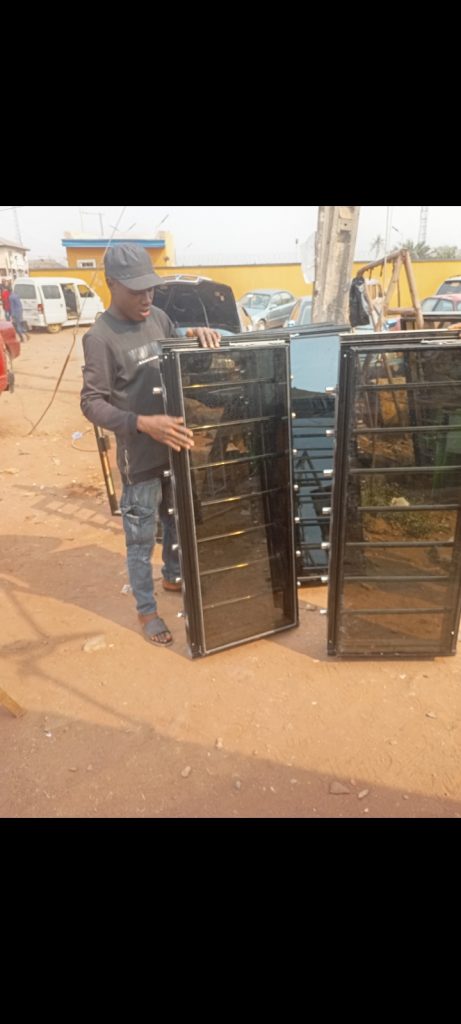
Let me put it this way.
Two houses can buy similar aluminium windows.
Same general type of profile.
Similar glass.
Similar-looking finish.
But after two rainy seasons, one homeowner may be perfectly comfortable while the other is calling the installer every time clouds gather.
Why?
Installation.
Finishing.
Attention to detail.
Proper drainage.
Correct sealing.
And how the window works together with the building.
This is why I always tell people:
Don’t only ask how much the aluminium window costs. Ask how it will be installed.
A cheap installation that later damages your wall, paint and interior finishing may become more expensive than you expected.
What should you check if your aluminium window is leaking?
If rainwater is entering around your aluminium window, don’t panic.
Start with simple checks.
Check exactly where the water appears
Is the water coming from:
- The top of the window?
- The bottom?
- The corners?
- Between the frame and wall?
- Through the sliding or opening section?
- Around the glass?
- From the wall beside the window?
The location gives you a clue.
Check the external side
Don’t only stand inside the room.
Go outside, when it is safe to do so, and inspect the window.
Look for visible gaps, damaged sealant, cracks around the wall and areas where water may be entering.
Check the drainage points
If your window system has drainage holes, make sure they haven’t been blocked.
Don’t randomly enlarge or modify the frame yourself.
If you’re not sure what you are looking at, get an experienced aluminium fabricator or installer to inspect it.
Check the wall above the window
Sometimes water comes from above.
It could be related to the wall, roof edge, flashing or another part of the building.
This is especially important when the leakage only happens during heavy rainfall.
Don’t immediately replace the entire window
This is where some homeowners lose money.
A leaking window doesn’t automatically mean you need a new window.
First diagnose the problem.
If the frame, glass and window system are still in good condition, the solution may involve correcting the installation, sealing, drainage or surrounding wall.
Of course, if the window itself is badly damaged or poorly made, replacement may eventually be necessary.
But find out first.
How to Avoid Bad Workmanship in Building in Benin City (Quick Guide)
How to prevent aluminium windows from leaking during rain
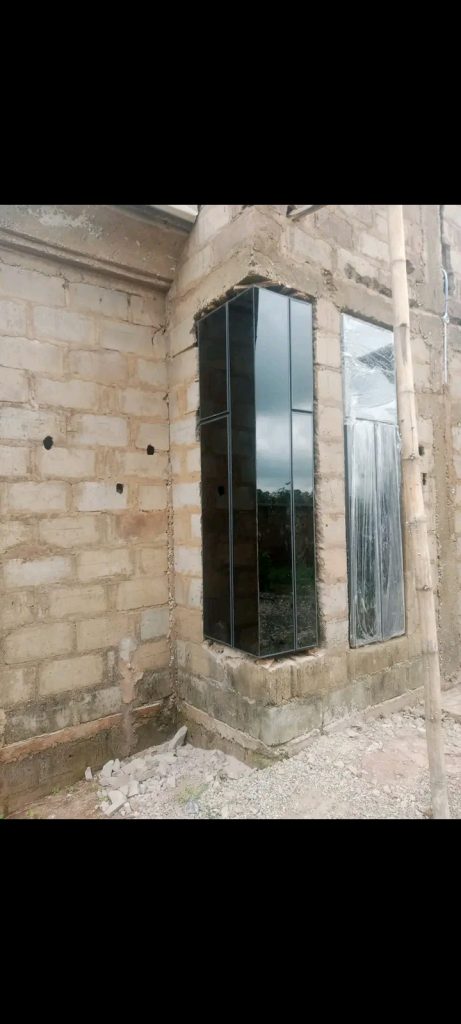
The best time to prevent leakage is before the window is installed.
If you’re building a house in Benin City, Edo State or anywhere in Nigeria, don’t wait until the first rainy season before thinking about water management around your windows.
Use proper measurements
The window should be properly measured against the actual opening.
Don’t work with assumptions.
A few millimetres may look insignificant on paper, but several installation errors can create a bigger problem.
Pay attention to sealing
The external joint between the aluminium frame and wall should be properly sealed using an appropriate sealant and proper preparation.
The goal isn’t to make the window look sealed.
The goal is to create a proper barrier against water where sealing is required.
Keep drainage paths clear
During construction, cement, dust and paint can end up around window frames.
These materials can interfere with drainage.
The installer should check the finished window properly instead of simply saying, “Work is finished.”
Inspect before the painter leaves
This is something I strongly recommend.
Don’t wait until the entire building has been painted and decorated before checking your windows.
Inspect them while you can still easily identify and correct problems.
Because imagine painting your entire room today.
Then the first serious rainfall comes tomorrow.
Water enters around the window.
Now you have another expense.
One question homeowners should ask before buying aluminium windows
Instead of asking only:
“How much is one window?”
Ask:
“What exactly am I getting, and how will it be installed?”
Ask about the aluminium profile.
Ask about the glass.
Ask about the locks and fittings.
Ask how the window will be installed.
Ask what happens if you notice a problem after installation.
You don’t need to be an engineer to ask these questions.
You are spending your money.
You have every right to understand what you are paying for.
The biggest lesson from that leaking window
Remember the homeowner I mentioned at the beginning?
The window itself wasn’t the first thing I wanted to blame.
I wanted to understand the water path.
Because that is how you solve building problems.
You don’t just look at where the problem appears.
You investigate where it started.
That leaking window taught the homeowner something many people only discover after spending money twice:
Good aluminium windows still need good installation.
You can buy a beautiful window.
You can choose good glass.
You can spend money on a nice finish.
But if the installation and water management around that window are poorly handled, rain will eventually expose it.
And believe me, it is better to discover these things before the rainy season than after you’ve already painted and furnished the room.
If you are building, renovating or replacing old windows, take your time.
Measure properly.
Choose the right window for the opening.
Use proper installation methods.
Pay attention to drainage and sealing.
And most importantly, don’t be afraid to ask questions.
Your window is not just there to make the building beautiful.
It should also work properly when the rain starts.
And in Nigeria, especially when those serious rains start coming, that’s when you really know whether the work was done properly.
Frequently Asked Questions
Why do aluminium windows leak during rain?
Aluminium windows can leak because of poor installation, gaps around the frame, failed sealant, blocked drainage holes, poor wall finishing, damaged components or water entering from another part of the building.
Can aluminium windows leak even when they are new?
Yes. A new window can leak if it was poorly installed or if there are problems with the surrounding wall, drainage or sealing. Being new doesn’t automatically mean the installation is correct.
Does leaking mean I need to replace my aluminium window?
Not necessarily. The first step should be identifying where the water is entering. Sometimes correcting the installation, sealing, drainage or surrounding wall can solve the problem.
How can I stop rainwater from entering my aluminium window?
Start by identifying the entry point. Check the frame, drainage points, sealant, corners and surrounding wall. A qualified aluminium window installer can inspect the complete installation and determine the appropriate repair.
Why does my window only leak when it rains heavily?
Heavy rain, especially when combined with strong wind, puts more water pressure on the window and surrounding wall. It can expose small gaps or weaknesses that normal rainfall doesn’t reveal.
Should I seal every gap around an aluminium window?
Not every opening should simply be filled with sealant. Some parts of a window system are designed for drainage. Sealing the wrong place can sometimes create another problem. The installation should be inspected properly first.
How do I choose aluminium windows for a house in Benin City?
Consider the window design, aluminium profile, glass, fittings, ventilation, security, drainage and quality of installation. Also consider the specific building opening and how the window will handle the local weather conditions.
How often should aluminium windows be checked?
It is a good idea to inspect windows periodically, especially after major rainfall. Look for damaged sealant, blocked drainage points, loose fittings, cracks around the wall and signs of water entering the building.
Royalville Estate, Coker Town, Ifo
Buying land is a major investment. Take a few minutes to understand the estate, its location, title, and other important details before making payment.
Ready To Start Your Aluminium Project?
Get professional aluminium fabrication, roofing installation, windows, doors, showglass, and custom projects done properly without leakage, weak fittings, or poor finishing.